
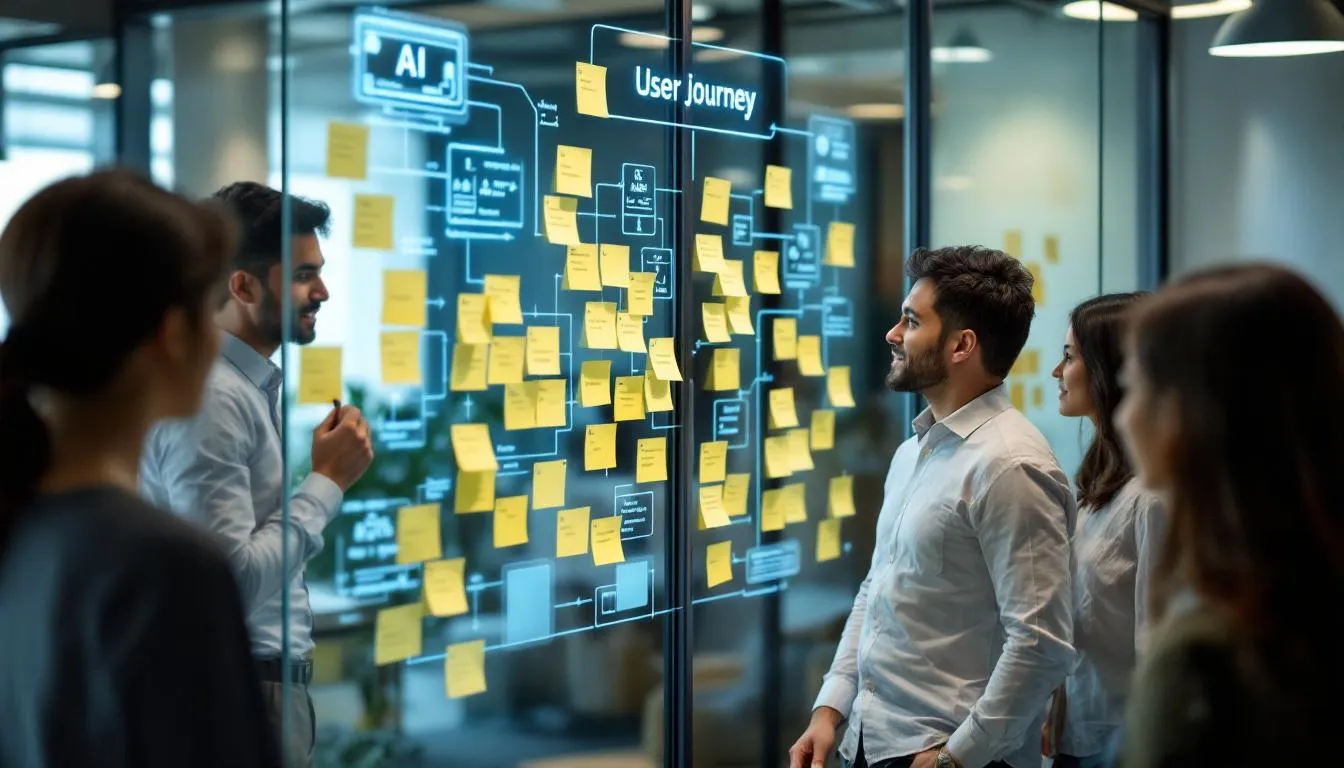
Learn how Malaysian SMEs are using 'Vibe-Coding' to build custom AI tools in 60 days for under RM10,000.
For decades, Malaysian SME owners have been trapped in a digital dilemma. When a workflow felt broken—perhaps your inventory tracking in a Klang warehouse was lagging or your customer service team in Bangsar was drowning in WhatsApp pings—you had two choices. You could either buy an 'off-the-shelf' software that forced you to change your business to fit its logic, or you could commission a custom app that cost as much as a terrace house in Ipoh and took six months to build. Most chose to just stick with Excel and a 'Boleh tahan lah' attitude.
That era ended last month. We are seeing a radical shift where local businesses are moving from 'coders' to 'conductors.' By adopting a 'System Composer' mindset, small teams are building fully functional AI assistants in just 60 days. This isn't about learning Python or Java; it's about 'Vibe-Coding'—describing the logic and 'vibe' of your business to an AI that handles the heavy lifting. If you can brief a junior designer, you can now build a custom enterprise tool.
Build Time Reduction
75%
Cost Savings vs. Legacy
RM50k+
Staff Hours Reclaimed
20/wk
What are AI use cases?
In the context of a Malaysian SME, AI use cases are specific, repeatable tasks where a machine can outperform or assist a human in speed, accuracy, or scale. Instead of thinking of AI as a 'robot boss,' think of it as a specialized intern that never sleeps. For a wholesaler in Chow Kit, a use case might be automatically converting messy WhatsApp voice notes from customers into structured digital orders. For a professional services firm in Kiara, it might be an AI that drafts personalized tax advisory emails based on the latest LHDN updates.
Critically, the most successful use cases in Malaysia are those that address 'Atomic Tasks.' These are small, painful problems that take your team more than 5 hours a week. By focusing on a single point of failure—like receipt scanning for SST compliance or matching supplier invoices to purchase orders—you create immediate ROI. You don't need a grand 'AI Strategy'; you need a list of three things your staff hates doing every Monday morning.
What are 10 ways AI is used today?
Modern Malaysian businesses are already deploying AI across ten primary functions to stay competitive. First, WhatsApp Business API automation handles the 'Pukul berapa buka?' (What time do you open?) queries that clog up sales lines. Second, Predictive Ordering helps bakeries in Subang Jaya calculate exactly how much flour to buy before a long weekend rush. Third, Content Personalization allows e-commerce sellers to generate 500 unique product descriptions for Shopee and Lazada in minutes rather than days.
Fourth, we see Style Cloning, where AI learns to write emails that sound exactly like the founder, maintaining a personal touch at scale. Fifth is Automated Debt Collection, where AI sends polite, personalized reminders to late payers. Sixth, Inventory Anomaly Detection flags when stock levels don't match sales patterns. Seventh, AI-Powered Recruitment screens resumes for specific local certifications. Eighth, Visual Quality Control uses cameras to spot defects in Penang's manufacturing lines. Ninth, Dynamic Pricing adjusts service fees based on demand. Finally, Internal Knowledge Bases allow staff to ask a private chatbot, 'What is our policy on maternity leave?' instead of bothering HR.
What are 5 common uses of AI in our daily lives?
To understand where your business can go, look at how AI already sits in your pocket. The most common use is Predictive Text and Autocorrect, which has evolved into smart email replies. Second is Navigation Apps like Waze or Google Maps, which use AI to predict traffic jams in the Federal Highway and suggest shortcuts. This is a perfect example of 'Predictive AI' that SMEs can use for delivery logistics.
Third, we use Recommendation Engines every time we open Netflix or Spotify; businesses can use this same logic to suggest 'Add-on' products to customers based on their past purchases. Fourth is Facial Recognition used to unlock phones, which is now being adapted by local retailers for secure staff check-ins. Fifth is Voice Assistants like Siri or Google Assistant. For an SME, this technology can be repurposed into voice-to-text systems that allow warehouse workers to log inventory hands-free while they move boxes.
What is the biggest use of AI?
Globally and locally, the 'biggest' use of AI isn't humanoid robots—it is Pattern Recognition and Data Synthesis. In Malaysia, this manifests as 'Self-Healing Data.' A plastic injection molding factory in Penang recently faced a crisis: their inventory data was a mess of typos and machine errors. Instead of hiring a data entry army, they built a lightweight AI layer that 'watches' their spreadsheets. When a human makes a typo, the AI doesn't just flag it; it suggests the fix based on historical patterns.
This ability to find the 'needle in the haystack' of your business data is where the real money is saved. Whether it's spotting a fraudulent transaction in a fintech startup or identifying which customer is about to stop buying from your retail store (Churn Prediction), AI’s biggest strength is its ability to process millions of data points and give you one actionable sentence: 'Call this customer today, or they will leave.' This transforms a business from being reactive to being predictive.
The 'Keeper' Rule: Why Humans Still Hold the Keys
The biggest mistake Malaysian SME owners make is thinking AI is 'set and forget.' Even with rapid 8-week builds, you need an 'Architectural Keeper.' This is a person on your team who ensures the AI-generated tools actually talk to each other correctly. They don't need to be a computer science genius from UM, but they must deeply understand your business flow.
They are the ones who check that the RM8,000 saved this month through automation isn't lost to a technical glitch next month. In our local context, where business strength lies in 'flexibility,' the Keeper ensures the AI adapts when MDEC introduces new grants or when the government changes tax regulations. AI provides the engine, but your Keeper provides the steering wheel. Without this human-in-the-loop, you aren't building a solution; you're building a liability.
Ready to stop wasting hours on manual tasks? Let's identify your first 'Atomic Task' and build a custom AI solution in weeks, not months.
Book an AI Strategy AuditFound this helpful? Share it with your network.