
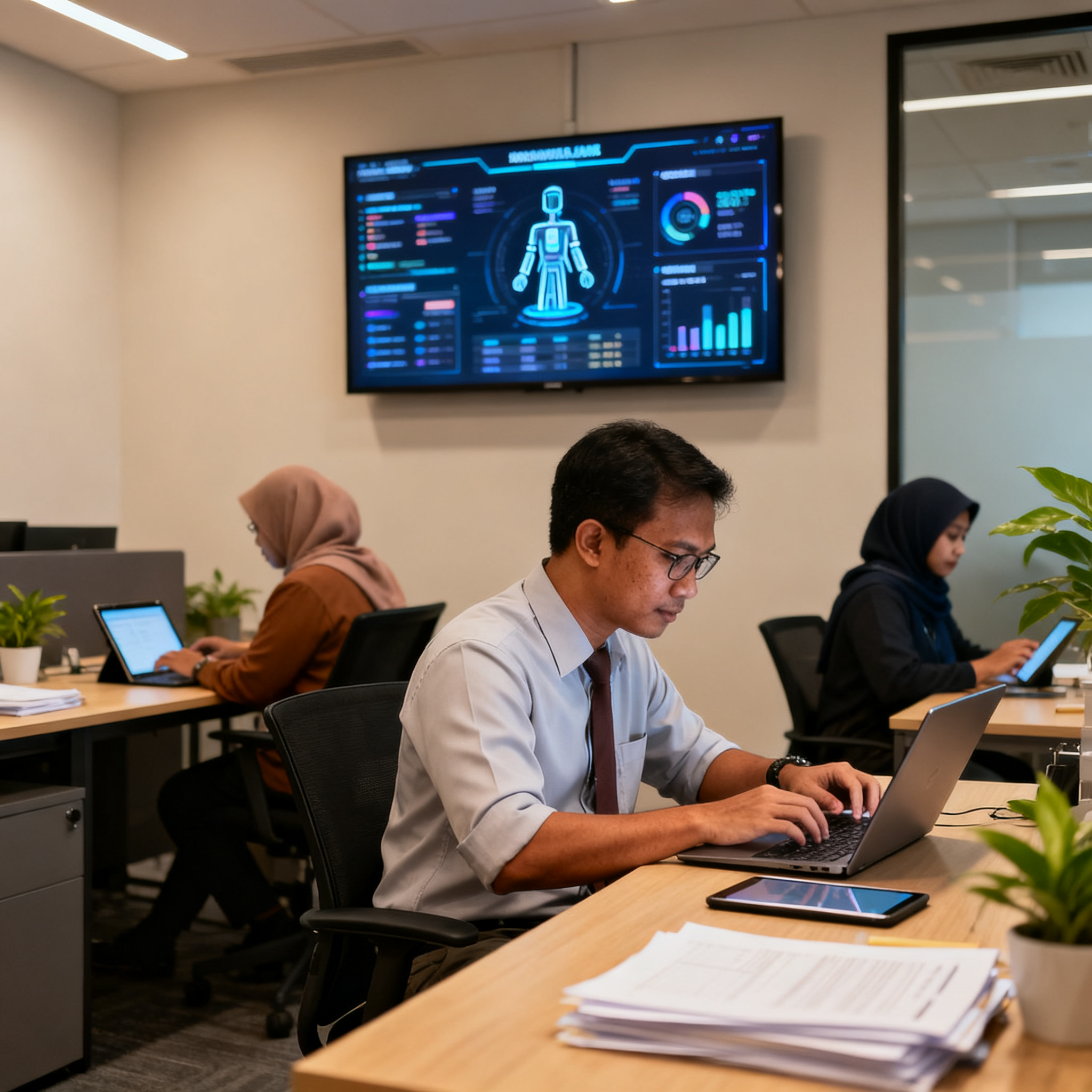
Discover how Malaysian SMEs are using AI to slash costs, enhance efficiency, and outperform competitors without massive investments.
In the rapidly evolving digital landscape of Southeast Asia, Malaysian businesses are discovering a powerful secret: AI isn't about replacing humans, but empowering them. This isn't science fiction - it's happening right now in mamak restaurants, manufacturing floors, and small retail stores across the nation.
The AI revolution isn't waiting for massive corporations. Small and medium enterprises are leveraging targeted, strategic AI solutions that solve real-world challenges. By focusing on specific use cases, Malaysian businesses can transform operations, reduce costs, and create competitive advantages that seemed impossible just years ago.
SMEs Using AI
42%
Cost Reduction Potential
30-50%
Efficiency Improvement
45%
What Are the Examples of AI Use Cases?
AI use cases aren't one-size-fits-all. They're precision tools designed to solve specific business challenges. Let's explore real-world applications transforming Malaysian industries:
In retail, AI-powered inventory management helps businesses predict demand with unprecedented accuracy. A Johor Bahru clothing boutique reduced stockouts by 45% by analyzing sales patterns and customer preferences. This means less wasted inventory and more targeted purchasing.
Manufacturing sectors, particularly in Penang's electronics industry, are using computer vision AI to perform quality control. What previously required hours of manual inspection now happens in milliseconds, detecting product defects with 99% accuracy and dramatically reducing waste.
How to Implement AI Use Case?
Successful AI implementation requires a strategic, incremental approach. Here's a proven roadmap for Malaysian SMEs:
-
Identify Repetitive Tasks: Look for processes consuming significant time but adding minimal strategic value. These are prime candidates for AI automation.
-
Research Industry-Specific Tools: Don't chase generic solutions. Find AI tools specifically designed for your sector - whether you're in F&B, manufacturing, or services.
-
Start Small, Scale Gradually: Begin with a pilot project. Test, measure results, and expand. This minimizes risk and allows your team to adapt.
-
Invest in Training: AI is a tool, not a replacement. Ensure your team understands how to work alongside these new technologies.
How to Define AI Use Case?
Defining an AI use case isn't about technology - it's about solving business problems. Ask yourself:
- What repetitive tasks drain my team's productivity?
- Where do human errors frequently occur?
- Which processes directly impact customer satisfaction?
for instance, a local restaurant might use WhatsApp chatbots to handle reservations and basic queries, reducing response times from hours to seconds. A trading company in KL could automate invoice processing, cutting accounting workload by 60%.
What is the 30% Rule in AI?
The '30% Rule' suggests that businesses can typically automate around 30% of current tasks using AI without significant restructuring. This isn't about wholesale replacement, but strategic augmentation.
For Malaysian SMEs, this means identifying those high-impact, low-complexity tasks that can be immediately enhanced by AI. Think customer support, basic data entry, scheduling, and routine communications.
Government initiatives like Malaysia's digital economy blueprint actively encourage this approach, with MDEC and SME Corp offering grants and support for digital transformation.
Ready to Transform Your Business with AI?
Get AI Strategy ConsultationFound this helpful? Share it with your network.