
Learn how a Penang retailer saved RM100,000 by replacing repetitive manual tasks with localized AI solutions built for the Malaysian market.
Imagine it’s 11:30 PM on a Tuesday. You’re finally settling down after a long day at your shop in Petaling Jaya when your phone pings. A customer is asking about stock availability at your Johor Bahru branch. In the traditional Malaysian SME model, you have two choices: ignore it and likely lose the sale to a faster competitor, or sacrifice your rest to reply. This is the 'hidden tax' of manual operations that drains the energy of business owners across the country.
What if a 'digital twin' of your best salesperson handled that entire conversation instead? Imagine a system that doesn't just give canned responses but confirms real-time stock, explains your delivery fees in RM, and closes the deal while you sleep. This isn't a futuristic dream for MNCs; it is the current reality for local businesses moving beyond the hype to find actual cash flow in AI. In this guide, we will explore how to stop chasing vague tech trends and start implementing AI that understands the unique pulse of the Malaysian market.
What You’ll Learn: You will discover the four specific types of AI relevant to your business, how to identify the 'human cost' of your current repetitive tasks, and the exact steps to build a solution that understands localized nuances like 'boleh' and 'OTW'. We’ll also tackle the big question of job survival and how to leverage MDEC grants to fund your digital transformation.
Operational Cost Reduction
50%
Faster Response Times
60%
Higher Customer Engagement
40%
Staff Time Saved on FAQs
60%
The RM100,000 Handshake: A Penang Case Study
For a prominent retailer in Penang, the breakthrough didn't come from a million-dollar software suite. It came from identifying that 60% of their staff's time was wasted answering the same five questions: 'Is this in stock?', 'What are your hours?', 'Where is my Shopee order?', 'Do you have a physical branch in KL?', and 'Can I get a discount?'. By automating these repetitive chats, they didn't just save time; they slashed operational overhead by 50% in the first year. In real terms, that’s over RM100,000 staying in the business instead of leaking out through inefficiency.
This success story highlights a critical lesson for Malaysian SMEs: the biggest drain on your profit isn't usually electricity or rent—it's the missed opportunities caused by the 'I'll get back to you' culture. When a customer has to wait four hours for a quote, they’ve already moved on to another seller. By integrating AI directly with popular local channels like WhatsApp, businesses are seeing up to 40% higher engagement because the 'digital handshake' happens instantly, regardless of the hour.
What are the 4 types of AI?
Before you invest a single Ringgit, you must understand what you are actually buying. AI isn't a single 'brain'; it categorized into four distinct levels of capability. For most Malaysian SMEs, the focus should be on the first three. First, there is Reactive AI, which is the most basic. These are systems that respond to specific inputs with pre-defined outputs—perfect for those 'What are your hours?' questions. They don't learn, but they are incredibly reliable for high-volume, low-complexity tasks.
Second is Limited Memory AI. This is where things get interesting for retail and service industries. These systems can learn from past data, such as a customer's previous purchase history or common complaints in your Klang warehouse. Third is Theory of Mind AI, which aims to understand human emotions and thoughts (this is still largely in development). Finally, there is Self-Aware AI, which exists only in science fiction for now. For your Monday morning blueprint, stick to Reactive and Limited Memory AI to see immediate results in your bank balance.
How to make an AI solution?
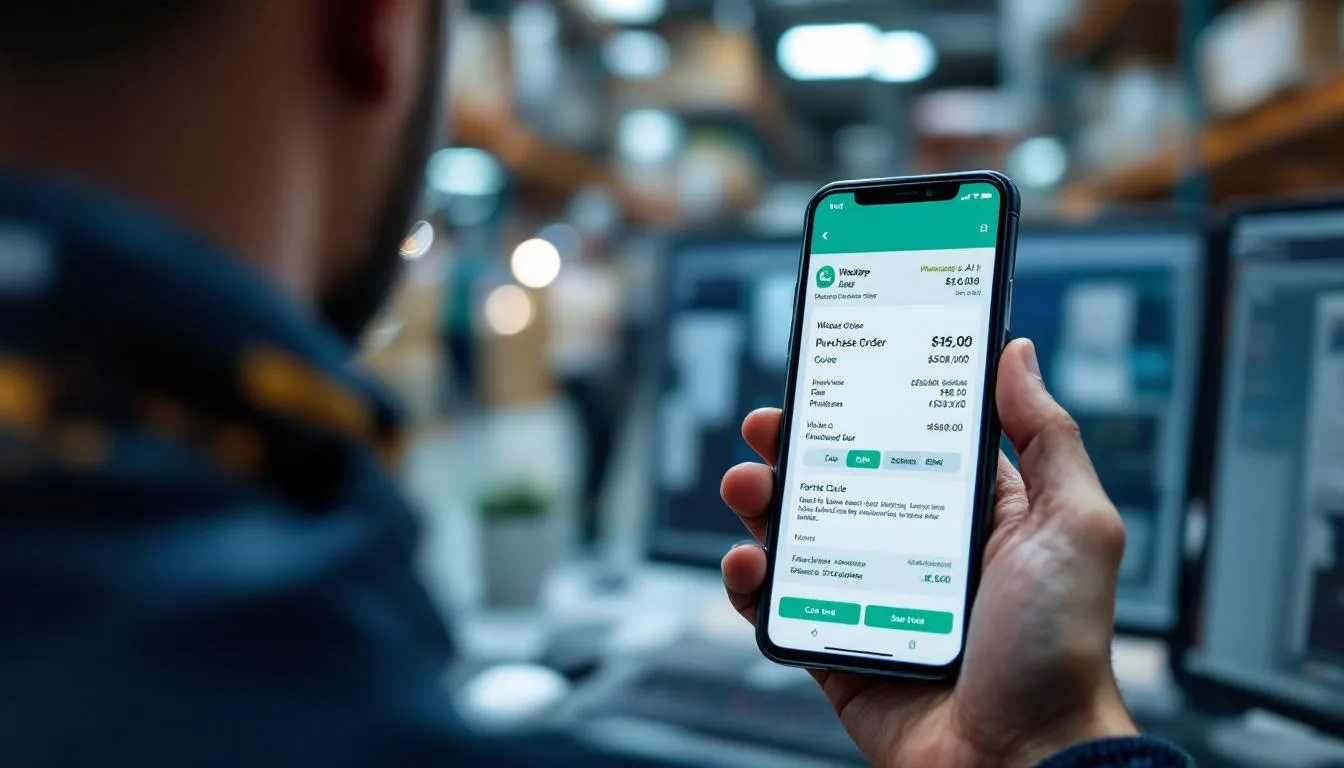
You don't need a PhD in Data Science to build a solution for your business. The process starts with 'Business Logic' rather than 'Coding.' First, identify your biggest time-sink. Is it answering WhatsApps? Is it tallying handwritten invoices? Once the bottleneck is identified, the 'making' involves mapping out your workflow. For example, a hardware supplier in Klang recently integrated AI with their WhatsApp. Instead of a clerk typing out details, the AI reads a photo of a handwritten purchase order and generates a formal RM quote in 30 seconds.
To make this work in Malaysia, you must ensure the 'training data' includes our local context. A generic US-based AI might struggle with a customer saying, 'Boss, item ni ada stock lagi tak? OTW nak pergi kedai.' Your solution needs to be fed with these local linguistic nuances. You can 'make' these solutions by using low-code platforms or partnering with local AI agencies that specialize in SME automation, ensuring the system understands the difference between a 'confirm' and a 'boleh lah'.
How to get solution from AI?
Getting a solution from AI isn't about asking it to write poems or generic emails; it's about letting it handle the data entry and pattern recognition that makes your head ache. To get a real business solution, you must provide the AI with your specific 'Knowledge Base.' This includes your price lists, your refund policies, and your inventory levels. When the AI has access to this data, it can provide 'Predictive' solutions—telling you when to restock your Penang warehouse before a festive rush based on last year's trends.
Another way to get a solution is through 'Human-in-the-Loop' automation. This means the AI handles 80% of the repetitive work but flags the complex 20% for a human. If a customer is genuinely upset about a faulty product, the AI recognizes the sentiment and alerts your manager immediately. This ensures that while you get the efficiency of a machine, you never lose the personal touch that is so vital in the Malaysian business landscape, where relationships are everything.
Which 3 jobs will survive AI?
There is a significant amount of fear regarding AI replacing staff. However, in the Malaysian context, AI is a tool for elevation, not just replacement. The three types of roles that will not only survive but thrive are those rooted in Empathy, Strategy, and Complex Problem Solving. A bot can process a refund, but it cannot empathize with a bride whose wedding dress was delivered in the wrong color. It can't navigate the complex social dynamics of a long-term B2B partnership in an industrial park.
Your goal should be to eliminate 'night shift' fatigue for your team. By automating the 'robotic' parts of a person's job—like data entry or answering FAQs—your staff can finally focus on high-value interactions that build brand loyalty. In our experience, SMEs that adopt AI don't usually fire people; they repurpose them. That clerk who used to spend 6 hours a day on WhatsApp is now your 'Customer Success Manager,' focusing on upselling and building deeper community ties.
The Local Advantage: Why 'Off-the-Shelf' Fails
Many Malaysian business owners make the mistake of buying expensive, 'off-the-shelf' Western AI solutions. These often fail because they don't account for our multicultural and multilingual environment. A customer in Petaling Jaya interacts differently than one in London. A localized AI that can switch between English, Malay, and Mandarin within a single sentence is what separates a frustrating chatbot from a helpful digital team member.
Furthermore, the Malaysian SME landscape is built on trust. Whether you are a cafe owner or a manufacturer, your customers expect quick, polite, and accurate service. Using AI to provide this 24/7 demonstrates that you value your customer's time. As we move toward 2025, the gap between businesses that use AI to enhance these relationships and those that stick to manual, slow processes will only widen. The urgency to act isn't about the tech—it's about staying relevant to the modern Malaysian consumer.
Ready to stop the 'hidden tax' and reclaim your weekends? Let’s build an AI solution that speaks your language and saves your bottom line.
Calculate Your AI ROIFound this helpful? Share it with your network.